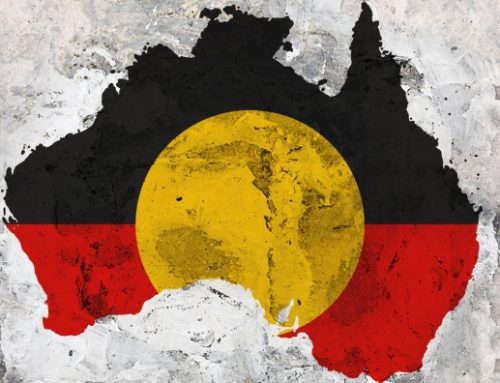
Our Land, Our Communities, Our Future
Djaran Murray-Jackson speech at AFSA’s Food Sovereignty Convergence,
Sunday 11 October 2026 | Jonai Farms, Dja Dja Wurrung Country
Firstly, I’d like to thank the Traditional Owners for welcoming us to Country this morning, and thank the Agroecology & Food Sovereignty Alliance and Jonai Farms for bringing us all together.
My name is Djaran Murray-Jackson. My name means Blue Sky in Wamba Wemba language.
I have connections up and down the Murray River, back through central Victoria and out to western Victoria.
I’m the Dja Dja Wurrung Reserved Seat holder and one of the Co-Chairs of Gellung Warl, the representative body for First Peoples here in Victoria.
It’s wonderful to be here today amongst so many people who have a genuine connection to the land, to food and to the communities they come from.
Now, some of you might know me through my work in Treaty, but what you might not know is that I’m actually a butcher by trade.
And I can tell you, when I was learning to make mince, I certainly didn’t think I’d end up standing in front of rooms talking about sovereignty and self-determination.
My Nan’s partner, who has since passed away, owned a farm near Alexandra where he raised cattle.
So farming wasn’t something completely foreign to me growing up.
But my own journey into the food industry happened almost by accident.
When I finished school, I decided I was going to take a gap year.
I thought that sounded like a pretty good idea.
About halfway through that gap year, my mother decided I’d had enough of a break and it was time to get a job.
And as most of you would understand, when your mother tells you it’s time to get a job, there’s generally not much room to negotiate.
So I ended up working in the produce department at Woolworths.
And from there, I found my way into an apprenticeship in butchering.
I actually really enjoyed it.
There was something satisfying about learning a trade. Learning how to use your hands, how to cut meat properly, and then putting that work in front of someone to take home.
Although I do remember the first time I made mince.
I was standing in front of this machine, feeling a little timid as it started tumbling away.
And then there was the mince crown.
For those who haven’t worked in a butcher shop, presentation matters. There’s a particular way to arrange the mince so it looks right.
Well, I couldn’t get mine right.
And my teacher certainly made sure I knew about it.
I remember him yelling at me because I couldn’t make it look as good as his.
Eventually I got there.
But looking back, I think that apprenticeship taught me far more than how to cut meat.
It taught me patience, discipline and how to take a bit of criticism.
But more importantly, it taught me how to work with people.
When you’re behind a butcher’s counter, you meet everyone. From all walks of life
You learn to listen, to have a laugh, to build relationships, and sometimes to deal with people who aren’t particularly happy.
And I genuinely believe those experiences helped give me the people skills that allow me to do the work I do today.
It’s funny how life works.
Sometimes the experiences that shape us most aren’t the ones we set out to have.
There’s another experience from my childhood that has stayed with me.
When I was about 11 or 13 years old, I remember going out to Menera Station, near Swan Hill.
We had a community day there with our Wamba Wemba people, and we were planting onions.
Now, when you’re that age, spending a day planting onions probably isn’t the first thing you’d put your hand up to do.
But I remember that day really clearly.
I remember the sun on my back.
I remember the dirt between my fingers.
And I remember being surrounded by my community, particularly our Elders.
There was something special about it.
We were all there together, doing something productive, working with the land, sharing stories and spending time with one another.
And what stands out to me now isn’t necessarily the onions themselves.
It’s the feeling of being part of something.
Being connected to the land, to your community, and to the generations who came before you.
At that age, I probably didn’t have the language to explain what that meant.
I certainly wasn’t thinking about food sovereignty or economic self-determination.
I was just a young fella spending a day with his community.
But looking back, I think that experience captures something really important about why we’re all here today.
Because food is about much more than what ends up on our plates.
It’s about our relationships with the land.
It’s about the work people do together.
And it’s about the responsibilities we have to one another.
For First Peoples, those responsibilities are grounded in our continuing connection to Country and our inherent sovereignty.
And while our histories and experiences are different, I think there’s something here that connects us with the farmers, producers and communities represented in this room.
We understand the importance of the land.
We understand the value of hard work.
We understand the importance of passing knowledge from one generation to the next.
And we understand what it means to want something better for our children and grandchildren.
I think that’s where solidarity begins.
Not by pretending we’re all the same, or that our histories are identical.
But by recognising where our interests align, respecting our differences, and understanding that we can achieve more together than we can on our own.
And that brings me to why I think this gathering is so important.
Because right now, we have an opportunity to do something meaningful with those shared interests.
When I look at the work of the Agroecology & Food Sovereignty Alliance, I see people who aren’t simply talking about the problems in our food systems.
I see people organising to change them.
People strengthening local food systems, advocating for fairer access to processing infrastructure, and building collective approaches to land and production.
You only have to look at where we’re gathered today.
Here at Jonai Farms, the development of an on-farm micro-abattoir demonstrates what can happen when people challenge the way things have always been done.
For someone who started out as a butcher, I find that particularly interesting.
Because I understand that raising livestock is only one part of the story.
There’s processing, distribution, retail, and the relationships that connect producers with the people who buy their food.
And if communities don’t have access to those parts of the system, their choices become limited.
That’s why infrastructure matters.
And that’s why working together matters.
And I think that’s where there’s a real connection between food sovereignty and the work we’ve been doing through Treaty in Victoria.
Because at the heart of both is a question about who gets to make decisions, who controls the resources, and who benefits from the wealth that is created.
Of course, First Peoples’ sovereignty is distinct. It comes from our continuing connection to Country, our laws, our cultures and our inherent rights.
But I think there’s an opportunity for us to recognise where our interests align and work together to create something better.
And that’s really what I want to spend the next few minutes talking about.
Because here in Victoria, we’ve just taken an enormous step towards giving First Peoples greater power to shape our own futures.
We’ve negotiated our first Statewide Treaty.
And while Treaty is fundamentally about the rights of First Peoples and our relationship with the State, I believe it also creates opportunities for the kinds of partnerships and relationships we’re talking about here today.
Treaty and Gellung Warl
The journey to Treaty in Victoria has been a long one.
Our Elders and ancestors have been calling for recognition of our rights and self-determination for generations.
In 2016, our community formally called for Treaty, and over the years that followed, First Peoples across Victoria came together to build the foundations for negotiations.
That led to the establishment of the First Peoples’ Assembly of Victoria in 2019.
I was fortunate enough to be part of that journey, and today I serve as one of the Co-Chairs of Gellung Warl. Gellung Warl means ‘tip of the spear’ in Gunaikurnai language.
Earlier this year, Gellung Warl came into effect as the new representative body established through Treaty.
And I think it’s important to understand what that represents.
For the first time since colonisation, we’re beginning to establish a system of collective self-government for First Peoples in Victoria.
A system where our people have greater authority to make decisions about the matters that affect our lives.
Gellung Warl has three arms.
The first is the democratically elected Assembly, where Traditional Owners from across Victoria represent our people and make decisions on their behalf.
The second is an independent oversight body, Nginma Ngainga Wara, which provides accountability and oversight of government.
And the third is Nyerna Yoorrook Telkuna, which continues the work of truth-telling and healing.
Together, these institutions represent a significant change in our relationship with government.
Because Treaty is not simply about recognition.
It’s about changing who makes decisions, how those decisions are made, and ensuring our communities have the resources and authority to determine our own futures.
And that’s where I see a connection with the work you’re doing here.
What Treaty Means for Country and Economic Self-Determination
Our first Statewide Treaty establishes the foundations for collective self-government.
But another important part of Victoria’s Treaty process is the opportunity for Traditional Owners to negotiate Treaties about their own Countries.
Those Treaties can address matters such as land and water rights, caring for Country and economic development.
And I think that’s particularly relevant to this gathering.
Because if we’re serious about food sovereignty, we also need to be serious about who has authority over land and water, who owns productive infrastructure, and who benefits from the wealth it creates.
Traditional Owners are already demonstrating what’s possible.
Here on Dja Dja Wurrung Country, Djaara is developing enterprises. One I should highlight is Djakitj where we are growing yabbies and kangaroo grass.
Down in Gippsland, Gunaikurnai people are developing their own native oyster industry.
And in the south-west, Gunditjmara people are demonstrating how cultural heritage, caring for Country and economic opportunity can come together through the Budj Bim landscape.
These are practical examples of economic self-determination.
And I think there’s an opportunity to build on them.
Imagine Traditional Owners and farming communities working together to develop new food enterprises, invest in regional processing infrastructure and create opportunities for our young people.
Imagine building economic relationships that respect Traditional Owner sovereignty while creating genuine benefits for local farming communities.
That’s where I think our interests can align.
And it’s where I believe solidarity can become something much more than a principle.
What Solidarity Looks Like from Here
I also want to acknowledge the work AFSA has already done through its First Peoples Focal Group and its commitment to putting First Peoples at the centre of its work.
That’s important.
Because solidarity isn’t just about supporting one another in principle.
It’s about how we work together, whose voices are heard, and who gets to make decisions.
And I think there’s an opportunity to strengthen that relationship as we enter this new Treaty era.
For those of you here today, there are practical things you can do.
Stay informed about Treaty and help others understand what it means.
Build relationships with the Traditional Owners of the Country where you live and work.
Look for opportunities to support Traditional Owner enterprises and develop genuine partnerships.
And when our people are calling for change, stand alongside us.
I want to finish by coming back to that day at Menera Station.
I can still picture myself as a young fella, with the sun on my back and dirt between my fingers, planting onions alongside our Elders and community.
At the time, it was just a good day out.
But looking back, I can see that there was something much bigger happening.
Our Elders were bringing us together.
They were teaching us about responsibility to Country, to community, and to the generations who would come after us.
Today, I think we have a similar responsibility.
We have an opportunity to bring people together who might not always find themselves in the same room.
To build relationships that might not otherwise exist.
And to turn those relationships into something productive.
Because one of the things I’ve learned throughout my life, whether it was behind a butcher’s counter, planting onions with my community, or negotiating Treaty, is that relationships matter.
And when people come together with a shared purpose, they can achieve extraordinary things.
So my encouragement to everyone here is to use this gathering to build those relationships.
Have the conversations.
Find the opportunities.
And think seriously about what we can build together.
Because the future of our food systems, our communities and our relationship with the land shouldn’t simply be something that happens to us.
It should be something we shape together.
Thank you.
I’m happy to take questions.
The speech has been shared publicly with permission from the author.